
Is Your Deck Ready for the Season?
The Homeowner’s Essential 10-Point Safety Guide from NADRA®
As the weather warms up, the deck becomes the heart of the home. It’s where we host barbecues, enjoy morning coffees, and relax under the stars. Decks are constantly exposed to elements like sun, rain, snow, and fluctuating temperatures, so they require regular checks to remain safe for our families and friends.
To help you navigate this, we’ve adapted the North American Deck and Railing Association’s (NADRA) 10-point consumer checklist. Whether your deck is a year old or a decade old, performing this annual inspection is the best way to ensure your space stays structural and secure.
1. Inspect for Split or Decaying Wood
Wood rot is the silent enemy of deck longevity. You need to check the overall structure, not just the surface boards.
The Test: Take a screwdriver or an ice pick and press it into the wood in several areas—specifically the ledger board (where the deck meets the house), support posts, and joists.
- Warning Signs: If the tool penetrates ¼ to ½ inch easily, or if the wood feels soft and spongy, decay is likely present.
- Insects: Look for small, patterned holes or sawdust-like residue, which could indicate wood-boring insects.
2. Check the Flashing
Flashing is a thin piece of metal or plastic designed to prevent water from pooling behind the ledger board. This is arguably the most critical safety component of your deck. If water gets trapped between the deck and your house, it can rot your home’s rim joist, leading to catastrophic deck failure. Ensure the flashing is firmly in place and directing water away from the house.
3. Look Over Fasteners and Connections
Decks are held together by a variety of nails, screws, and bolts. Over time, wood shrinks and expands, which can “pop” fasteners out.
- The Ledger Board: This should never be attached with nails alone. It requires heavy-duty bolts or structural screws.
- Corrosion: If you see rusted or corroded fasteners, replace them immediately. Corrosion can actually accelerate the deterioration of the surrounding wood. If you need replacement screws, check out CAMO’s full line of code-compliant and high performing Structural Screws. They are engineered to start fast, drive smooth, and hold strong. No pre-drilling required. CAMO Structural Screws also feature our industry-leading proprietary coating for superior corrosion resistance.
- Stability Check: Give the deck a “stress test.” It should not sway or move when you walk or jump on it.
4. Evaluate Stairs and Stringers
Stairways are high-traffic areas and prone to wear. Check the stringers (the diagonal boards supporting the steps) to ensure they are securely attached to the deck frame.
- The 4-Inch Rule: If your stairs have open “risers” (the gaps between steps), those openings should be no more than 4 inches high to prevent small children from slipping through.
- Clear the Path: Keep stairs free of planters, toys, and décor that create tripping hazards.
5. Test Railings and Banisters
Railings are there for a reason: to catch you if you lose your balance. A loose railing is a major liability, especially on elevated decks. Lean against your railings to ensure there is no “give.” Every connection point, from the post to the deck frame, should be rock solid.
6. Prioritize Cleaning and Maintenance
Debris like wet leaves and pine needles can trap moisture against the wood, leading to mildew and rot.
- The Cleaning: Sweep away organic matter and use a deck-specific cleaner to remove mildew.
- The Seal: If water no longer beads on the surface of your deck, it’s time to apply a new waterproofing coating. This isn’t just for looks; it prevents the wood from cracking and splitting.
7. Fire Safety: Grills and Firepits
We all love a deck firepit, but heat and wood (or composite) are a risky duo.
- Placement: Ensure grills and heaters are kept a safe distance from railings and house siding.
- Protection: Use a non-flammable “deck shield” or pad under any heat source to prevent embers or high temperatures from damaging the surface.
8. Lighting and Electrical
A well-lit deck is a safe deck.
- Visibility: Clean your light covers and trim back any overhanging branches that might be casting shadows over walkways.
- Code Compliance: Ensure all outdoor outlets are GFCIs (Ground Fault Circuit Interrupters) and have weatherproof covers.
- Modern Upgrades: If your deck is dark, consider low-voltage LED riser lights or post-cap lighting to illuminate the perimeter safely.
9. Outdoor Furniture and Storage
Check the structural integrity of your patio sets. Rust on metal furniture or cracks in plastic chairs can lead to collapse.
- Safe Storage: If you keep deck cleaners, lighter fluid, or matches in deck boxes, ensure they are stored in childproof containers or have latches that kids can’t open.
- Placement: Avoid placing heavy seating right at the edge of the railing.
10. Scan Surrounding Trees
Finally, look up. Large trees provide great shade, but decaying or “widow-maker” limbs can fall during a storm and cause massive damage to your deck or anyone sitting on it. Trim back any dead branches that hang directly over your outdoor living space.
Check Your Deck
A deck is more than just an extension of your home; it’s an investment in your lifestyle. By spending just thirty minutes once a year going through this NADRA 10-Point Checklist, you can catch small issues before they become expensive, or even dangerous, problems.
Ready to upgrade your deck? Explore CAMO Fasteners for structural screws and hidden fastening systems designed to keep your deck strong and secure for years to come.
Structural Framing with CAMO
In the world of professional framing, the structure of a building is where a reputation is either forged or forgotten. Whether you are throwing up a post-frame barn, framing a high-end deck, or handling a complex remodel, the structural integrity of your columns, beams, and joists is non-negotiable. This is the load-bearing heart of the structure. If the skeleton is weak, the whole body fails.
At CAMO, we don’t do “weak.” We provide a full line of high-performing, code-compliant structural screws engineered for contractors who refuse to compromise. We’re talking about fasteners designed to start fast, drive smooth, and hold with a level of strength that lasts long.
The New Standard for Structural Connections
Traditional methods, like lag screws or through-bolts, are slow. They require pre-drilling, multiple tools, and wasted time. CAMO Structural Screws are engineered to eliminate that friction. Our screws are third-party tested and certified IBC and IRC code-compliant (State of Florida FL 41741), meaning they aren’t just tough—they’re resilient on the job site.
From wood-to-wood framing and deck blocking to general interior and exterior construction, these screws are load-rated to handle the stress.
Multi-Purpose Flat Head: The Flush-Finish Powerhouse
Skip pre-drilling and enjoy fast starts with CAMO Multi-Purpose Flat Head Structural Screws. They start fast, drive easily, and seat flush in deck posts, beams, handrails, and other exterior projects.
Third-party tested and certified IBC and IRC code-compliant, they are an ideal replacement for traditional ⅜” lag screws and through-bolts. These screws feature our industry-leading PROTECH Ultra 4 four-layer coating system, offering superior corrosion resistance for long-lasting connections. CAMO Multi-Purpose screws are used for deck posts, beams, handrails, gardening and landscape projects, and other general construction projects.
Multi-Purpose Hex Head: Lock In and Drive
For heavy-duty applications, the CAMO Multi-Purpose Hex Head Structural Screws are the professional’s choice. They also start fast with no pre-drilling and drive easily in deck posts, beams, handrails, and other exterior projects. The 3/8” hex head with an integrated 1/2” washer locks into the driver, allowing you to drive one-handed without holding the screw.
These screws are an ideal replacement for traditional ⅜” lag screws and through-bolts, and are third-party tested and certified IBC and IRC code-compliant. Like the flat head, they feature our industry-leading PROTECH Ultra 4 four-layer coating system, offering superior corrosion resistance for long-lasting connections. Deck posts, beams, cabinets, gardening and landscaping projects, and other interior and exterior general construction projects are the ideal jobs to use these screws on.
Truss Screws: Speed Meets Security
CAMO Truss Screws are the smarter, faster replacement for securing truss-to-top plate or stud-to-top plate connections. We’ve even included a truss guide in every package for a perfect 22.5° installation every single time.
They finish flush, drive easy, and keep your crew moving. In this business, time is money, and CAMO Truss Screws save you both without sacrificing an ounce of safety.
Don’t Let Your Frame Rot: Joist + Ledger Deck Tape
A strong frame is useless if it rots from the inside out. CAMO Joist + Ledger Deck Tape is the insurance policy every deck needs. This self-adhesive butyl tape creates a waterproof membrane over your joists and ledger boards, sealing around fasteners to block moisture.
- Self-seals around fasteners to stop water in its tracks.
- 20-year Limited Warranty because we stand behind what we build.
- Made in the USA for the contractor who values quality.
The Bottom Line
Structural framing isn’t just about meeting code; it’s about exceeding it. CAMO tools are built for the pros who want to get the job done right the first time and get on their way. No pre-drilling. No excuses. Just pure, structural strength.
Ready to upgrade your fastening game?
How-To Build a Strong Floating Foundation with CAMO BLOCK
Stop fighting the dirt. Building a low-profile deck, shed, or walkway shouldn’t feel like a grueling excavation project. When your design allows for a floating foundation, you can bypass the pickaxe and the need for deep footings that risk interference with underground lines. Build on the earth, not against it.
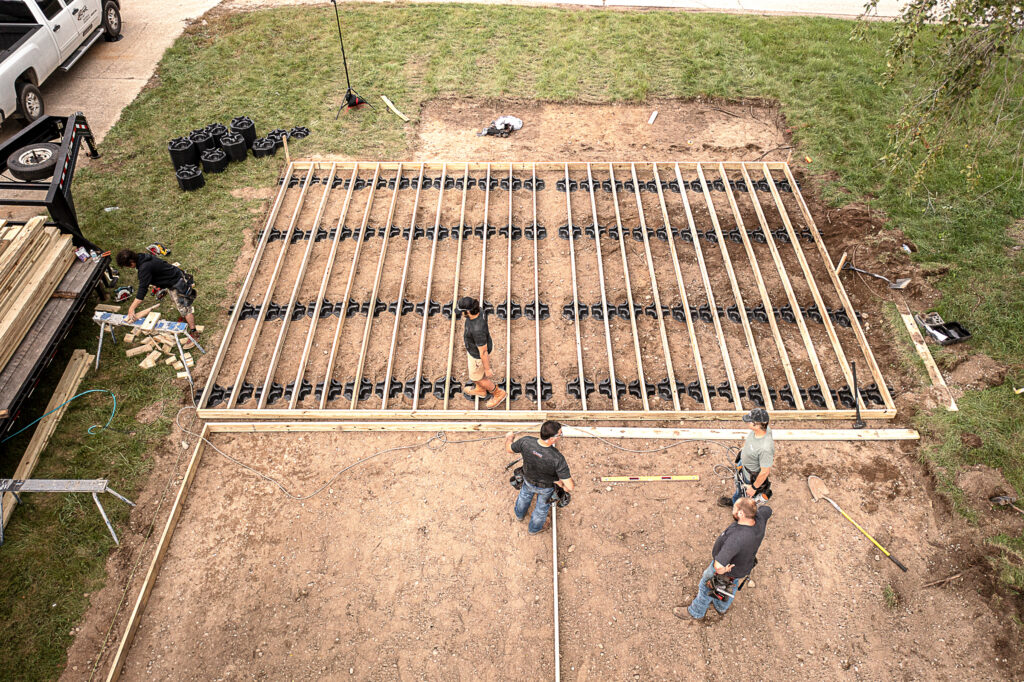
The CAMO BLOCK offers a revolutionary way to create a stable foundation without the back-breaking labor of traditional masonry. Made from heavy-duty, UV-protected recycled polypropylene, each block is rated to support up to 1800 lbs.
As a reminder, always check with your local building code officials before starting any project. Freestanding decks 5 ½ in. to 30 in. tall, and smaller than 200 square feet in size, typically do not require building permits. Moving forward, here is everything you need to know to spend less time in the dirt and more time actually building your project.
Step 1: Planning and Site Preparation
CAMO BLOCK can be used to build various platform profiles and projects. To determine how many blocks to use for a low-profile, raised-profile, variable-height, or hybrid-profile project, check out the fully detailed installation guide for CAMO BLOCK here.
Before you pick up a BLOCK, you must ensure your ground is ready. A floating foundation is only as stable as the soil beneath it.
For maximum stability, it is highly recommended to lay down a 2-3 inch base of compacted gravel or crushed stone. This prevents the BLOCK from settling into soft mud and provides essential drainage to keep your lumber dry. However, if you are in a dry environment with level ground and opting for a quick installation, you do not need to use a paver base.
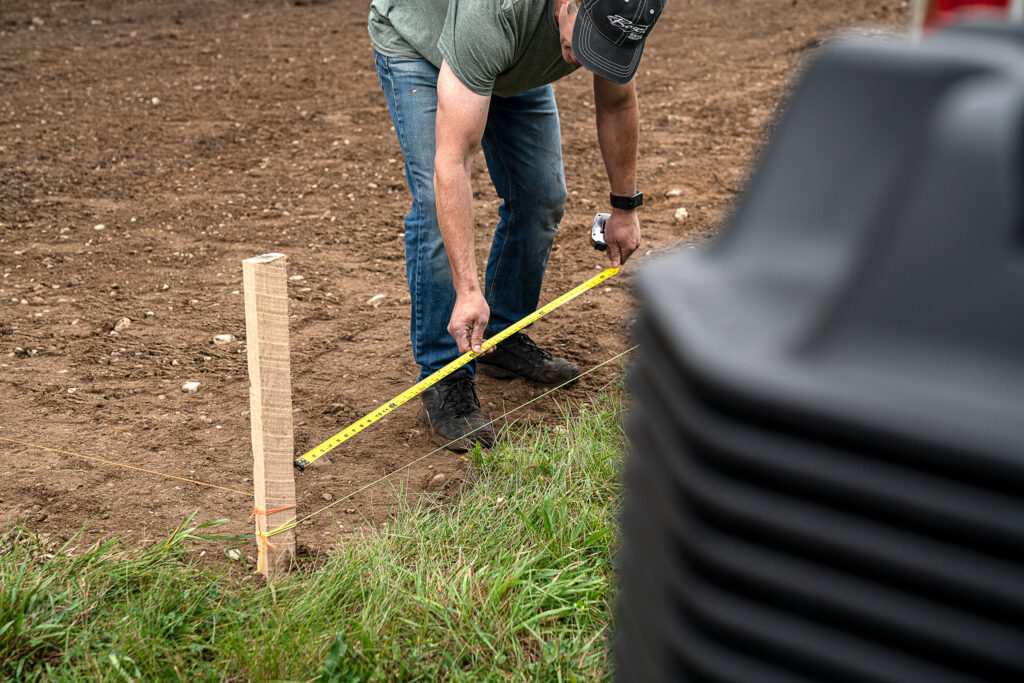
Step 2: Laying Out the CAMO BLOCKS
Consult your structural plans to determine the spacing of your joists and beams. Generally, CAMO BLOCKS should be spaced no more than 5 feet apart.
- Grid Alignment: Position your BLOCKS in a grid pattern. One of the primary advantages of the CAMO BLOCK is its “nested” design, which allows it to accept 2×4, 2×6, and 4×4 wood posts or joists.
Squaring the Foundation: Use the 3-4-5 triangle method to ensure a perfect 90-degree corner or measure diagonally from corner to corner to ensure your block layout is perfectly square.
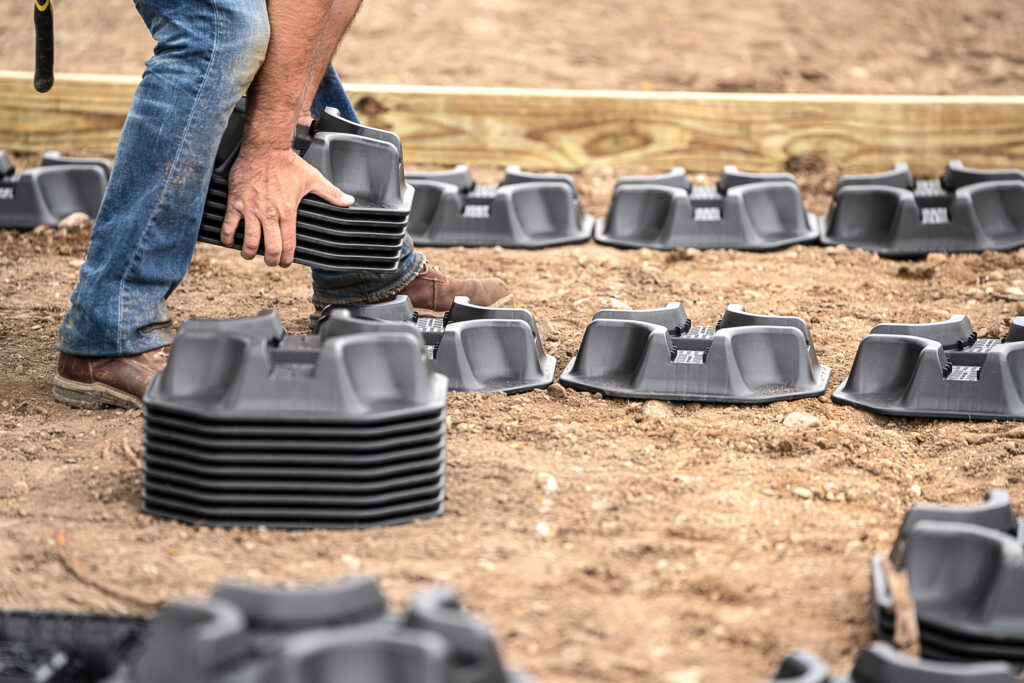
Step 3: Installing Joists and Support Posts
The CAMO BLOCK is designed with a multi-purpose top surface that accepts standard 2X joists and 4×4 posts. Additionally, there is a 2” slot for metal joists, and an allowance for 6×6 post settings as well.
- Direct Joist Support: If you are building a very low-profile “platform” deck, you can place your standard 2X joists directly into the molded slots of the BLOCK.
Post Support: If your project requires more height, the center of the block is designed to hold a 4×4 pressure-treated post. Once the post is inserted, you can cut it to the desired height and attach your rim joists.
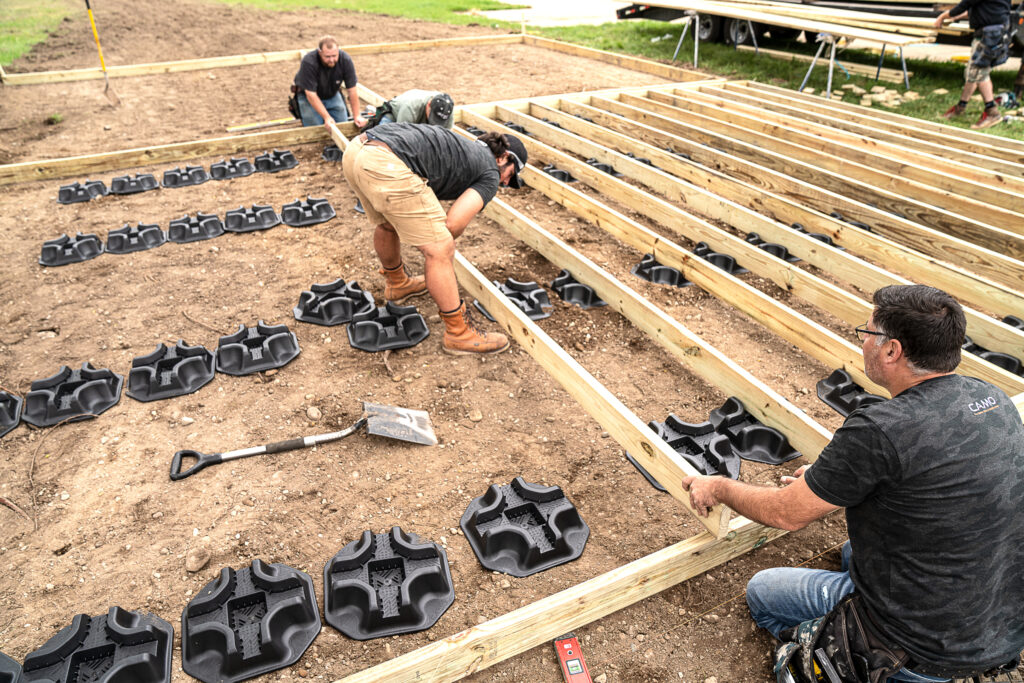
Step 4: Leveling the Structure
Rarely is the ground perfectly flat over a large area. To level your foundation:
- Lay your joist across two BLOCK.
- Place a carpenter’s level on top of the joist.
- If one side is low, do not shim the wood. Instead, add or remove gravel beneath the CAMO BLOCK until level. This ensures the weight remains distributed across the entire surface of the BLOCK.
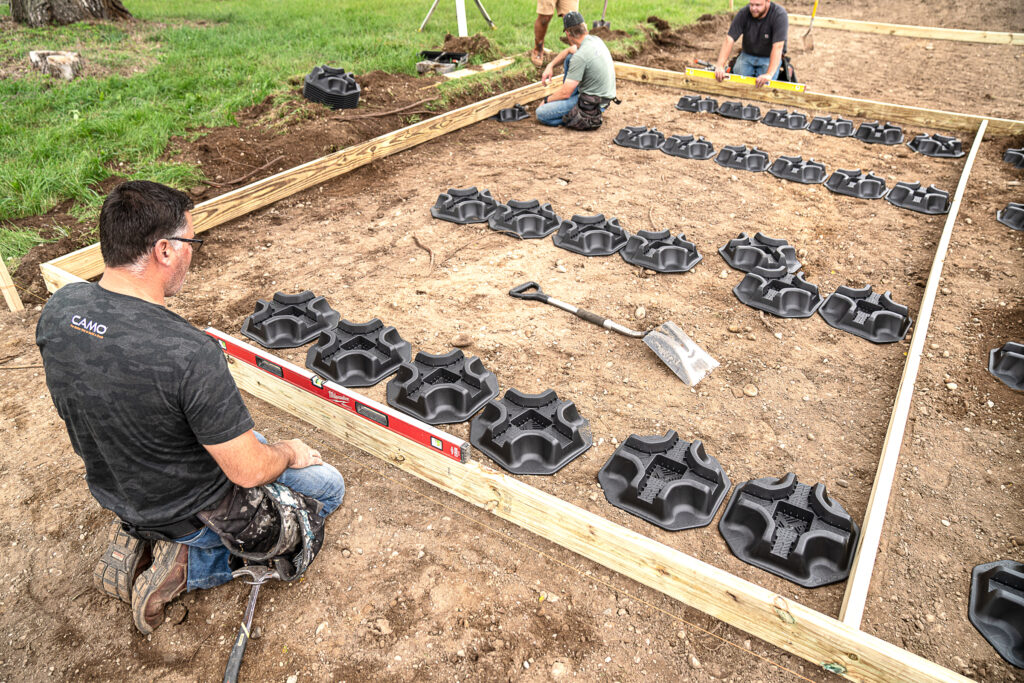
Step 5: Final Assembly and Ventilation
Once your BLOCKS are level and your joists are in place, secure your framing according to local building codes. Because the CAMO BLOCK raises the lumber off the ground, it provides critical airflow. This ventilation prevents moisture buildup and rot, significantly extending the life of your wood frame.
The Better Floating Foundation
If your design allows for a floating foundation, CAMO BLOCK lets you skip the hard part and get straight to the build. Following these steps ensures a professional, durable result for your next backyard sanctuary or garden shed. It’s time to stop fighting the dirt and finally start building.
Hidden Fasteners: Worth the Upgrade
When you’re building a deck, what most people remember isn’t the framing or the support. It’s the finish. That first barefoot walk across a new deck should feel smooth, look clean, and reflect solid craftsmanship. That’s exactly why hidden fasteners aren’t just a nice touch, they’re a smarter way to build. From a sleek visual finish to strong connections and fast installs, hidden fastening systems, like CAMO’s, deliver real performance benefits that go beyond aesthetics.
The Clean, Professional Look You Can’t Fake
Let’s start with the obvious: no visible screw heads. Traditional face screws interrupt the board surface, distract the eye, and can become a pain point for homeowners who want a polished outdoor space.
With CAMO’s hidden fastening systems, whether you’re using Universal Deck Clips for grooved boards or CAMO Edge Deck Screws for square-edge boards, the fasteners are designed to disappear as much as possible. The result? A seamless deck surface with consistent spacing and uninterrupted board lines. That’s a finish that looks pro, and a design result your clients deserve.
How Hidden Fasteners Work
There are two CAMO approaches to hidden fastening, each engineered for specific decking profiles:
Universal Hidden Deck Clips
Perfect for grooved wood, composite, or PVC decking, CAMO’s hidden clips lock boards into place without ever showing a screw head. Built-in spacing makes layout intuitive, and options like EDGE® Clips for straight installs and WEDGECLIPs™ for straight, angled, or custom patterns keep boards tight and true.
CAMO EDGE Deck Screws
Got square-edge boards? CAMO Edge Deck Screws pair with the MARKSMAN Pro tool to drive screws at the perfect angle, through the board edge and into the joist, for the same hidden finish without clips. The rake tip and trimhead design help draw boards tight while minimizing splits and improving long-term board integrity.
Strength You Can Rely On
Hidden fasteners aren’t just for looks. They improve performance too. CAMO clips are engineered to handle significant forces once installed, with testing showing up to 88% more lateral strength and 50% more uplift resistance than competitor clips.
Edge screws take strength a step further by pulling boards tight against joists and locking them in with a v-lock connection that resists splitting and maximizes holding power.
Install Faster, Work Smarter
Time on the jobsite = money. CAMO hidden fastening isn’t just about the end look — it’s about making the process efficient and predictable:
- Consistent board spacing built into the system means fewer layout headaches.
- CAMO pre-assembled clips are designed to stay in place until you’re ready to fasten, preventing fallouts while you work.
- Tools like the ClipDRIVE® let you work standing up, reducing fatigue and speeding up clip installation.
- When using Edge Screws, the MARKSMAN Pro tool ensures every fastener goes in at the right angle and spacing, making installs more consistent and predictable.
Built for Any Material, Any Project
Hidden fastening systems have come a long way. CAMO products work with composite, PVC, hardwood, and pressure-treated lumber. That versatility doesn’t just make hidden fasteners possible on more builds, it makes them smarter. You’re not limited by board type or orientation. Design choices stay in your hands, and the fastening system adapts.
CAMO universal deck clips are designed to work with all major grooved board brands, meaning the same clip can be stocked to handle each project. No need to sift through inventory to find that particular clip for a particular board.
The Value You Can See (and Feel)
Hidden fasteners pay off in ways that matter to both builders and homeowners:
Visual Impact
No screw heads means a finish that feels custom and elevated, the kind of detail that clients notice first.
Durability
Strong fastener hold and controlled installation help boards stay tight and stable over time, even through weather, use, and seasonal movement.
Efficiency
Consistent spacing and tool-assisted installation make builds faster and easier, whether you’re working solo or as a team.
Satisfaction
A smoother surface means happier clients. Fewer complaints, fewer callbacks, and more referrals. That’s a profit you can measure.
Bottom Line
Hidden fasteners aren’t a trend. They’re a better way to build. They combine a clean, professional finish with real performance benefits: strong connections, fast installs, and long-lasting results. Whether you’re putting in grooved boards with universal clips or fastening square edges with CAMO Edge Screws, you’re investing in a deck that looks sharper, is long-lasting, and builds confidence every time.
DIY Decking 101: Choosing the Right CAMO Fasteners and Tools for Your Project
Building a deck yourself is a big project, and getting it right starts with the details you don’t always see once the boards are down. One of the most important is how those boards are fastened.
Most DIYers want the same end result the pros do: a fastener-free deck surface. No exposed screw heads. No patched holes. Just clean boards that stay tight.
CAMO offers two proven ways to get there. The right one depends on the profile of your decking boards.
A Fastener-Free Deck Surface
When a fastener-free surface is the goal, you’ve got a choice. How you get there comes down to the edge profile of the boards you’re installing.
Decking boards generally fall into one of two profiles:
- Grooved boards, which are most common with composite and PVC decking. Certain exotic hardwoods are also pre-milled with grooves because their density makes face-screwing difficult and prone to cracking.
- Square-edge boards, which are most often natural wood, though composite lines also include square-edge options for use as starter boards, fascia trim, or picture-frame borders.
Both profiles can deliver a clean, fastener-free surface. They just do it differently.
Grooved Deck Boards
If your decking boards have grooves along the edges, use CAMO Hidden Deck Clips for a fastener-free surface.
Secure the first and last grooved board with CAMO STARTER Clips. Just place clips on the outside of the joist, center with the cross-joist, and fasten with your drill.
Then, reach for CAMO EDGE Clips or WEDGECLIPs. The clips fit into the groove and fasten down to the joist below with a one-pass installation that keeps the fasteners completely out of sight. Spacing stays consistent, and the deck surface stays clean, edge to edge.
Use CAMO Hidden Deck Clips when:
- Your decking boards are grooved
- The groove is intended for clip installation
- You want a fastener-free surface using clips
Square-Edge Deck Boards
If your decking boards have a square edge, hidden clips aren’t an option. But that doesn’t mean you can’t get that pro finish you’re after.
CAMO EDGE Deck Screws have you covered. EDGE screws drive through the edge of the board at a precise angle, pulling it tight to the joist while keeping fasteners off your decking surface. No clips required.
To make that angled fastening accurate and repeatable, CAMO MARKSMAN® tools position each screw before you drive it. The tool sets the angle automatically, then you finish the job with your drill—no measuring, no guessing, no wrestling the screw into place by hand.
Use CAMO EDGE Deck Screws when:
- Your decking boards are square-edged
- Clips aren’t compatible with the board profile
- You want a fastener-free surface using edge-driven screws
CAMO Fasteners for Long-Term Performance
A fastener-free surface only matters if the deck stays tight, flat, and secure over time. Quality results are what CAMO is all about.
CAMO deck screws and clips are engineered specifically for decking, not general construction. That means they’re designed to handle the movement, exposure, and load changes that decks see season after season.
Key performance advantages DIYers benefit from:
- Corrosion-resistant coatings designed for pressure-treated lumber, composite, PVC, and hardwood decking
- Threading that bites cleanly and holds fast, reducing loosening as boards expand and contract
- Patented rake top to auger material out, reducing the potential for splitting and cracking
- Fastening systems tested to work together for consistent spacing, grip, and alignment across the deck
- Reduced lateral movement and superior in uplift holding power compared to competitors’ clips
The result is a deck that looks clean when you’re done and stays solid season after season.
Faster DIY Decking Installations Without the Strain
No sugar-coating: a DIY deck build is real work. Once you’ve matched the right CAMO fastener to your decking board profile, CAMO also has tools that make the install easier, especially when you’re tackling longer runs or a bigger project.
Installing deck boards usually means constant bending, kneeling, and resetting. CAMO DRIVE® and ClipDRIVE® are stand-up, drill-powered fastening tools designed to break that cycle, letting you work upright, keep steady pressure on your boards, and move continuously instead of starting and stopping.
- CAMO DRIVE works with collated CAMO deck screws, feeding fasteners automatically as you go so every screw lands clean and consistent—no handling individual screws.
- CAMO ClipDRIVE is built for clip-based installs, allowing you to set each hidden deck clip in place between boards, then drive the screw fast and accurately from above.
Set your boards in place, hold them tight with CAMO LEVER® where needed, and move straight down the deck, fastening one board after another without breaking stride. Do these tools really make installs that much faster? You bet they do. Two times faster.
But the benefit isn’t just speed. It’s a DIY install that stays consistent, under control, and doesn’t beat you up. The CAMO DRIVE and ClipDRIVE let you stay on your feet, keep steady pressure on your boards, and fasten continuously without punishing your knees.
CAMO Fasteners That Build Confidence
A deck isn’t just another weekend project. It’s where people gather, relax, and make memories. The fasteners holding it together should reflect that.
CAMO fasteners and tools are built to give DIYers confidence, control, and a finished result they’re proud to stand on. No shortcuts. No unnecessary complexity. Just a better way to build your deck.