
Choosing the Right Deck Fastener
Your deck is an investment—be sure you’re using the best fastener for your project.
Decks are no longer just a spot to grill. They have become outdoor living spaces, extensions of your home to enjoy for years to come. While every deck requires routine maintenance of cleaning the boards or staining if needed, one thing you’ll hopefully avoid is ever having to replace boards. You can reduce this potential by being selective with the deck fasteners you use. Typical deck screws, or deck nails, that are fastened through the face of the board have a higher tendency to split or crack the decking. Once you add some moisture to the mix thanks to rain or snow, the decking won’t just look bad—it will be damaged beyond repair.
All that to say that the type of fastener you use is just as important as the kind of decking you install. While there are various fastening options available, CAMO offers deck fastening systems to help you install decking smarter, faster, easier, and better than other products. So first, let’s break down some information about coatings and alloys, then walk through options based on the type of decking you want to use.
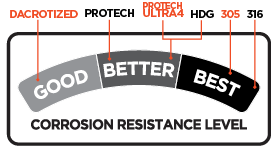
Fastener Coatings and Alloys
Depending on where you live and the kind of deck project you’re installing, you’ll need to be sure you’re using a fastener with the correct coating or alloy to protect your project against rust and corrosion.
PROTECH™

PROTECH is CAMO’s proprietary fastener coating suitable for use with pressure treated lumber, PVC, composite, and capped composite deck boards in inland environments that face regular exposure to the elements. It’s available in various colors to blend into whatever decking you use.
305 Stainless Steel

305 Stainless Steel fasteners are ideal for exterior structures 3,000 ft. or further from a saltwater shoreline or any outdoor project that you want to protect against potential corrosion. They offer an excellent aesthetic finish in installations of pressure treated, PVC, composite, and capped composite boards.
316 Stainless Steel
If you want to install the best type of fastener for your build, 316 Stainless Steel is the only choice. 316 Stainless Steel is required in coastal, marine, or waterway areas within 3,000 ft. of saltwater. It is also the best practice for structures exposed to chlorine, wood strippers, or ice-melting chemicals and agricultural environments that deal with chemicals, pesticides, and treatments. You’ll also need to use 316 Stainless Steel if you’re installing cedar, redwood, or hardwood decking where tannin release caused by carbon fasteners may cause staining.
Deck Fasteners by Board Type
Now that you understand alloys and coatings let’s review the best CAMO deck fasteners by board type.

Pressure Treated Lumber Decking
Remember the split boards we mentioned earlier? We were referring to pressure treated lumber, which, while it’s the least expensive option, doesn’t have the lifespan of other types of decking—especially if you don’t use the right fastener.
The best fastener to preserve the face of the deck board and add longevity are CAMO Edge Screws that secure the boards to the joist through the edge. These innovative screws feature a patented rake tip that augers board material as they’re driven, reducing the potential for splitting and cracking, and a trimhead that reduces visibility on the side of the board. For pressure treated lumber, install Edge Screws using the MARKSMAN Pro®-X1 tool that clamps to the board and creates 1/16 in. spacing. For no gap between boards, use the MARKSMAN Edge Tool.
For a faster and more comfortable installation with the same great hidden fastener result, use the CAMO DRIVE® tool with Collated Edge Screws for Wood and Composite. With the stand-up fastening tool, you can quickly move from joist to joist, securing the boards in no time. In addition, using DRIVE will leave no gap between boards at all, which is great for wet pressure treated lumber that will shrink over time.
If you desire the traditional look of a face-fastened deck, use the CAMO DRIVE and Collated Face Deck Screws for Pressure Treated. These screws have the same rake tip as the Edge screw, so the board material is removed while you drive the screw, reducing the potential for splits and cracks.
Cedar and Redwood Decking
Cedar and redwood follow similar guidelines as pressure treated lumber, so Edge fastening is the best way to secure them. However, you will want to use 316 Stainless Steel Edge Screws to prevent tannin staining. Luckily, CAMO Edge Screws have a black coating that blends into the side of the board, still giving you that hidden fastener finish instead of seeing bright Stainless Steel between the boards.
You’ll need to leave a 3/16 in. gap between deck boards to allow for expansion and contraction, so use the MARKSMAN Pro® tool for hand drive installations, or use secondary spacers with the DRIVE tool and 316 Stainless Steel Collated Edge Screws for Wood and Composite.
Square Hardwood Decking
If you’re investing in a natural hardwood that offers strength, durability, and beautiful, long-lasting aesthetics, you don’t want to blemish the surface with a regular deck screw. Instead, preserve its beauty and achieve a fastener-free surface on Ipe, Cumaru, Tigerwood, Kebony, Angelique, and Merbau decking with the MARKSMAN Pro® tool and 316 Stainless Steel CAMO Edge Screws.
Given the density of the boards, you will need to pre-drill holes before fastening to eliminate any potential for splitting the board or snapping the screw. To speed up fastening, we recommend using two drills, one with the pre-drill bit and one with the driver bit, so you can place the MARKSMAN Pro tool, run the pre-drill bit through it, drop the screws in, and fasten.
Square Composite and PVC Decking
Hopefully, you’ve caught on by now, so it shouldn’t be surprising that Edge fastening is the best way to install square composite and PVC decking. For uncapped composites and PVCs, you don’t need to pre-drill holes before fastening screws. That means you can fasten with either the MARKSMAN Pro tool or standing up with the CAMO DRIVE tool and Collated Edge Screws for Wood and Composite using secondary spacers to create a 3/16 in. gap between boards. For capped composites, on the other hand, you will need to pre-drill holes before fastening to avoid any mushrooming or difficulty driving, so only the MARKSMAN Pro tool is recommended.
For a traditional face-fastened look in a fraction of the time of crawling around on your hands and knees, use CAMO Collated Face Screws for Composite with the DRIVE tool. These screws have a sharp point to start fast and are color-matched to blend into the surface on the most popular deck boards.
Grooved Decking
The best fasteners for any grooved decking are CAMO Universal Deck Clips: EDGE® Clips for 90° deck patterns and EDGEX® Clips for any deck pattern on wood joists, and EDGEXMETAL® Clips for installs on metal joists. They are fast and easy to install— EDGE Clips sit on the joist while EDGEX Clips fit in the board’s groove, so you can quickly place them with one hand and set rows of boards and clips in place before fastening.
CAMO Universal Deck Clips feature a stainless steel gusset that holds the boards down, making them 88% stronger than competitors’ clips in reducing lateral movement and up to 50% stronger in uplift holding power. Plus, the plastic clip body covers the joist completely and creates consistent 3/16 in. spacing, making a perfect install possible.
These clips also offer the best install experience, coming with the NEVER-MISS Guide that sits over the screw, so you can quickly direct the bit onto the top of the screw. For the fastest installation, you can use the CAMO ClipDRIVE® or DRIVE stand-up tools to fasten while moving from joist to joist. Finally, they’re backed by a CAMO warranty, so you can confidently use them for any grooved decking install.
Exterior Fasteners for Any Install
We know you need fasteners for more than securing the deck boards, and CAMO has you covered there too. Whether you need nails to secure framing, joist hangers, or hurricane straps, or deck and trim screws for other wood-to-wood or finish applications, you can rely on CAMO exterior fasteners to secure your projects.
So when it comes to installing your decking, it may seem like there are many deck fasteners to choose from. But to get the job done well, so you can enjoy your outdoor living space, you’ve got to choose CAMO.
Differences in Deck Clips
Not all hidden deck clips were created equal. Here’s an introduction to the top hidden deck clips on the market so you can select the correct fastener for your build.
High-quality grooved composite decking deserves fasteners that will keep the boards in place and help maximize the deck’s longevity. But with such a wide variety of hidden deck clips on the market, how do you choose the right one that’s sure to be easy to install and perform over time?
Let’s take a look at some of the most popular types of hidden deck clips and compare their design, price, and performance so you can choose the best fastener for your build.
Plastic Clips: Trex® Hideaway® and TurboClip™
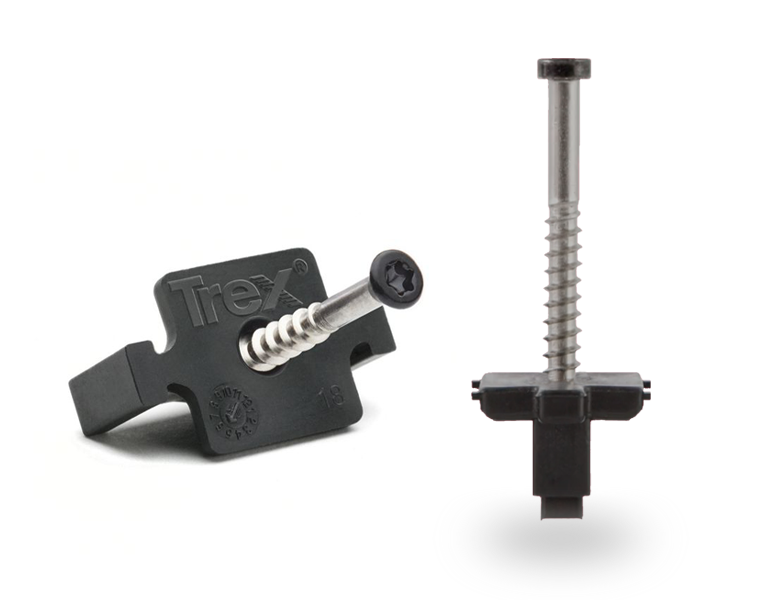
One of the most commonly-used deck clips, the Trex Hideaway, is made of plastic. These clips are inexpensive at around $0.50 per fastener, they create a 3/16 in. gap between boards, and are widely accessible and versatile, and are able to be used with multiple brands of grooved decking.
While its basic design aids in a low cost and versatility, it can hinder the installation experience. The Trex Hideaway Universal Hidden Fastener requires two steps for installation: first, place your board, set a clip in the joist, and fasten the screw part of the way. Then, you must place your next board before driving the screw the rest of the way. That’s a lot of time hunched over and matching the bit to the screw.
Trex does have the One-Step Hidden Fastener Tool to eliminate this two-step process. The tool costs around $25 and holds the fastener correctly in the board so you can secure it once. However, while it saves some time compared to partial installation, you still have to load a clip each time, which can be tedious.
TurboClips are an alternative plastic fastener that eliminates the need for a partial installation. TurboClips come in a strip of 16 that saves you time from fumbling for a clip at each joist. Instead, you can place the fastener into the board, fasten it entirely, snap off the stick, then slide your next board in place.
Once installed, plastic clips don’t offer much lateral holding power, so as the boards expand and contract, they are more likely to shift over time. Plus, the body of the clip doesn’t completely cover the joist, so you will see both the black plastic and wood between the boards, which isn’t the most aesthetically pleasing.
Metal Clips: Tiger Claw and CONCEALoc®
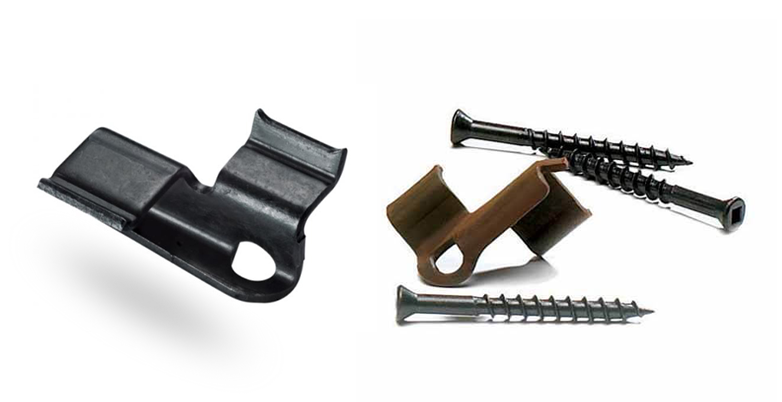
The alternative to plastic is metal fasteners with prongs that fit into the board’s groove and are fastened by a screw in hand drive applications or a scrail if you use a pneumatic gun. Tiger Claw TC-G Hidden Deck Fasteners cost around $0.50 per hand-driven fastener and $0.65 per pneumatic fastener and are compatible with multiple types of grooved composite boards. The other popular option— CONCEALoc Clips —are designed for AZEK® TimberTech® boards that cost around $0.81 per hand-driven fastener and $0.79 per pneumatic fastener.
While no partial installation is needed with metal clips, be prepared for a slow install by hand. It takes time and precision to place the clip centered on the joist and drive the fastener at a 45-degree angle. Luckily, the pneumatic Tiger Claw gun significantly speeds up installation. However, you still have to load a new clip every time before firing, and it comes with a $470 price tag—an investment that’s only worth it if you build multiple decks.
Thanks to their design, metal clips offer a strong hold for lateral movement; however, they make it very difficult to replace a board if needed, as you have to remove the entire field of boards to get to the one you need to replace. In addition, the metal clips can tilt when installed, so you may not get consistent spacing between boards. And, just like plastic deck clips, metal fasteners don’t cover the joist completely.
Plastic and Metal Clips: CAMO® Universal Deck Clips
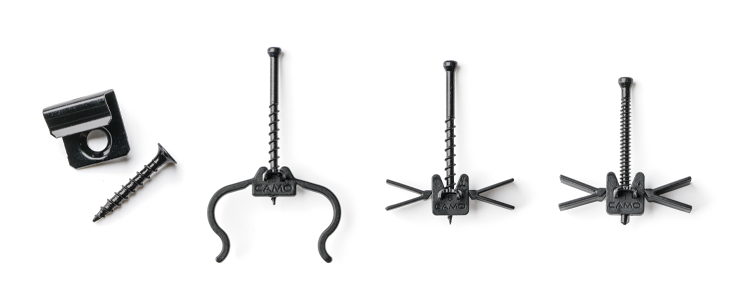
One of the most innovative deck clips on the market combines plastic and metal to bring an easy installation and strong holding power to any grooved deck build. CAMO Universal Deck Clips, which include EDGE® Clips for 90° deck patterns and EDGEX® Clips for any deck pattern on wood joists, and EDGEXMETAL® Clips for installs on metal joists, cost around $0.50 per fastener and are fast to install.
CAMO Universal Deck Clips are easy to handle and stay in place—no partial installation needed. The plastic legs of the EDGE Clip sit on the joist while the wings of the EDGEX Clip fit in the board’s groove, so you can quickly place them with one hand and set rows of boards and clips in place before fastening. The plastic clip body covers the joist completely and creates consistent 3/16 in. spacing, while the stainless steel gusset holds the boards down. As a result, they are 88% stronger than competitors’ clips in reducing lateral movement and up to 50% stronger in uplift holding power. Given its top-down access, it’s also easy to back out the screws, slide out the clips, and replace a board if needed.
To help speed up installs even more, each pail of CAMO Universal Deck Clips comes with a NEVER-MISS Guide that sits over the screw, so you can quickly direct the bit onto the top of the screw. For the fastest installation, you can use the CAMO ClipDRIVE® or DRIVE stand-up tools that are around $130 and $185, respectively, so you can fasten while moving from joist to joist—an excellent investment for any deck builder.
So when choosing a hidden fastener for your grooved deck build, don’t settle for any clip to do the job. Instead, consider the installation experience and how the fasteners will hold up over time so you can be confident you’ve built a better deck.
Deck Fasteners 101
Face screws, Edge screws, and Hidden Deck Clips: Learn the differences between these fasteners to decide what to use for your deck build.
When you’re building a deck, you likely know what kind of board you want to use. But have you put much thought into how you’ll fasten it? Sure, using any old screw could do the job, but it also might mean you’ll spend more time replacing boards down the road than enjoying the deck. Learn more about three types of fasteners— face screws, Edge screws, and hidden deck clips —so you can make the right choice for your project.
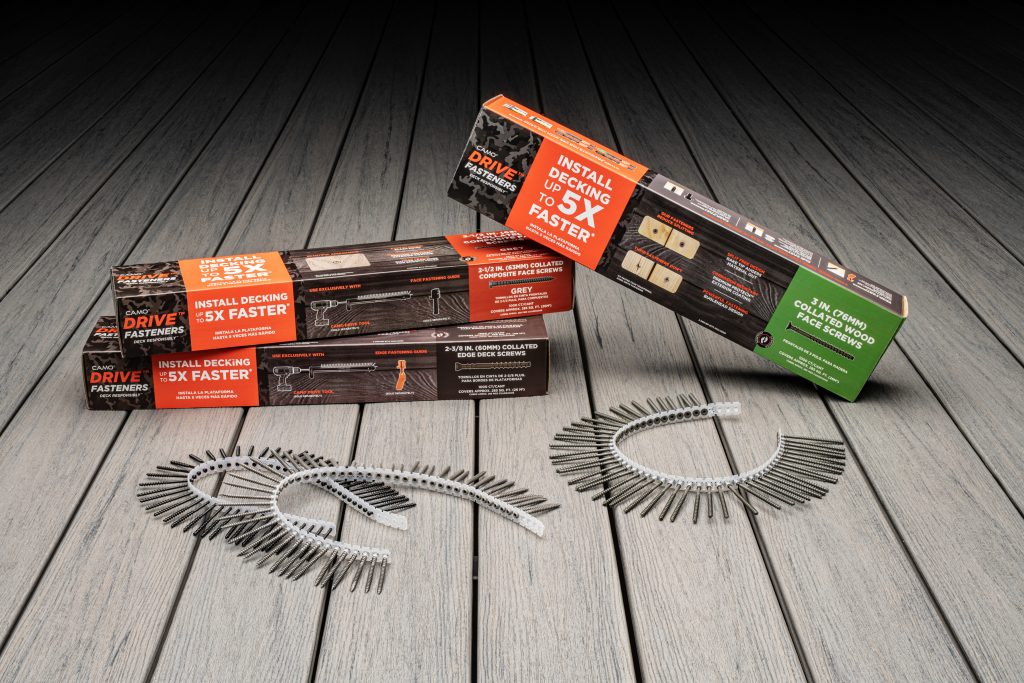
Face Screws
Tried and true, face screws are a traditional fastener for square deck boards. For wood boards like pressure treated, cedar, and redwood, you can use a buglehead deck screw, which is designed to keep the board down but is also very visible on the deck top.
For square composite or PVC decking, there are color-matched composite screws that blend into the deck surface. These screws typically feature a double slash point to auger board material for fast driving and a shank designed to reduce mushrooming, giving you a clean finish.
While face screws are cost-effective, they can cause splitting and cracking, which ages your deck prematurely. Consider using a face screw engineered to reduce these risks, like CAMO® Collated Face Screws for pressure treated wood and composite. A bonus for these collated screws? You can install them quickly and comfortably while standing with the CAMO DRIVE® tool.
Finally, using the correct coating or alloy for your project is essential. For example, a carbon-coated face screw will be fine for pressure treated, PVC, and composite decks in temperate climates, but use corrosion-resistant 316 Stainless Steel screws for cedar, redwood, hardwood, and installations near water.
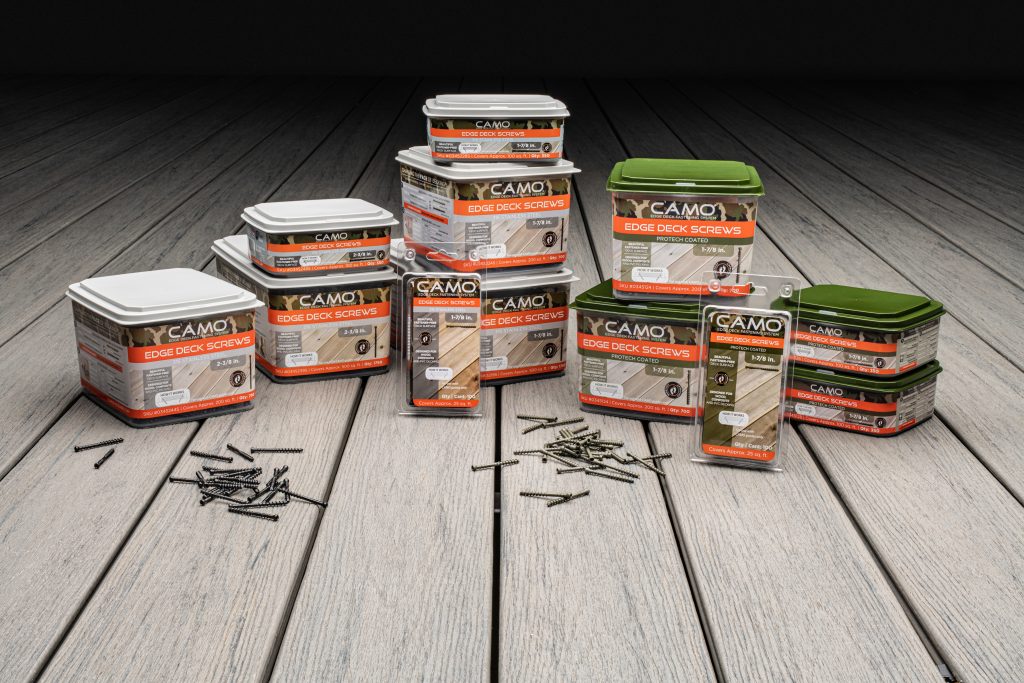
Edge Screws
If you want to maximize the longevity of your square deck boards and keep the surface clean from fasteners, use CAMO Edge screws. These screws, as their name suggests fasten the board through the edge, making a strong v-lock connection into the joist. Additionally, they feature a patented rake tip that augers board material, so you don’t need to pre-drill holes on pressure treated wood, cedar, redwood, and uncapped composite decking before fastening. They are available in CAMO’s proprietary PROTECH™ coating and 316 Stainless Steel so that you can use them on any deck building project.
Edge screws are available in hand drive and collated options. Use hand drive Edge screws with MARKSMAN Tools that clamp to and space the boards and act as a guide, directing the screw into the board’s edge. Use collated Edge screws with the CAMO DRIVE tool for pressure treated installs in no time.
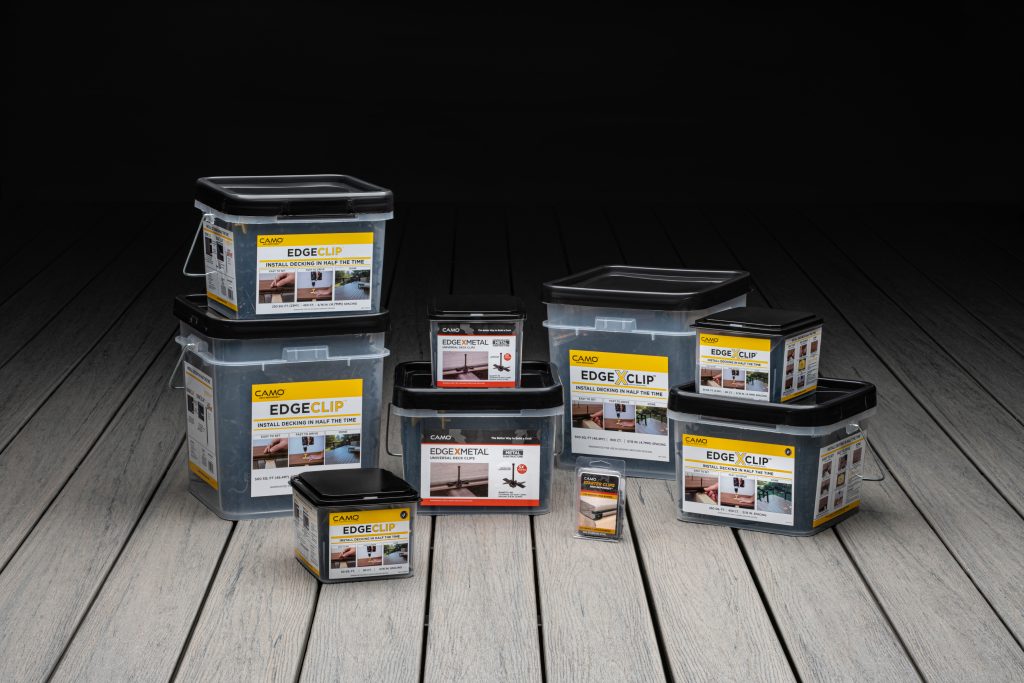
Hidden Deck Clips
Use hidden deck clips for any grooved deck board installation. Similar to face screws, there are many options, but CAMO Universal Deck Clips top the list. Why? Unlike many clips where you have to partially install them, place the next board, then drive the clips the rest of the way, CAMO EDGE® Clips (90° deck patterns), EDGEX® Clips (any deck pattern), and EDGEXMETAL® Clips (steel framing) are one-pass fasteners. That means you put them on the joist or in the board’s groove, and they stay in place so you can set multiple rows of boards before fastening, which is a significant time-saver.
Additionally, CAMO Universal Deck Clips are up to 88% stronger than competitors’ clips in reducing lateral movement and up to 50% stronger in uplift holding power, thanks to the stainless steel gusset that locks the boards down. They are also easy to fasten with the NEVER-MISS™ Guide that comes in every pail and directs the driver bit onto the screw head, or while standing up with the ClipDRIVE or DRIVE tools that can make your job up to 5X faster as you can quickly move from joist to joist.
To build the best deck possible, don’t just use any screw to secure your decking. Instead, think about the finished result, then pick up the right CAMO fastening system to make your work smarter, faster, easier, and better.
Introduction to Edge Fastening
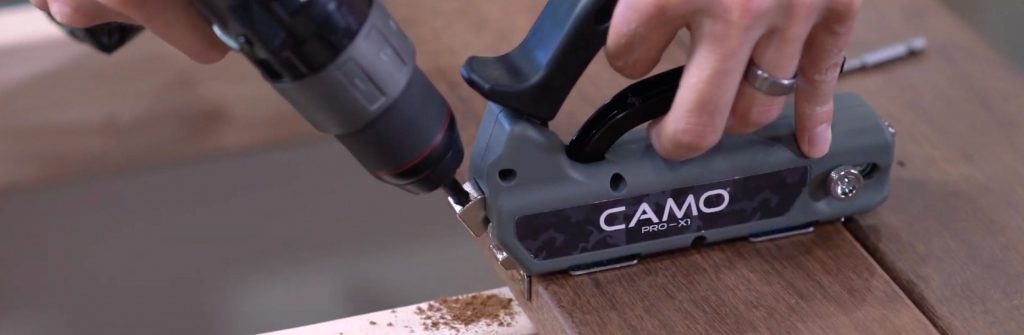
What Edge fastening is, why it’s the best option for square decking, and how CAMO helps you build better.
Fastening through the face of a deck board ages it prematurely. Traditional deck screws, though providing a strong hold, can potentially crack the boards and cause them to split and splinter. Not what you want when you’re investing time and money into an outdoor living space.
The better way to fasten any square deck board, including pressure treated wood, cedar, redwood, PVC, and composites, is through its edge. Not only does this leave the board’s surface clean from fasteners, reducing the potential for splitting and cracking, but it also creates a solid v-lock connection into the joist, reducing lateral movement. That means you’ll maximize the longevity of your deck, enjoy a high-end hidden fastener finish, and do it at a fraction of the cost of grooved decking and clip systems.
So how can you achieve a fastener-free deck top with no visible screws and no cracks or splinters on the face of the board? Pick up the Marksman System. While there are a variety of products that can help you install hidden fasteners on square decking, they are either costly or take a lot of time and require pre-drilling. The Marksman System, is an affordable option that will save you time while helping you install square deck boards easily.
CAMO’s hand drive system includes CAMO Edge Screws and MARKSMAN Tools that create spacing between the boards and act as a guide, directing the screw into the board’s edge. To speed up installs of pressure treated decking where no spacing is needed between boards, you can utilize the CAMO DRIVE® stand-up tool and collated Edge screws.
While the tools are key, the Edge screws do the work. These screws feature a patented rake tip that augers board material while being driven. That action makes space for the screw and prevents splitting and cracking without the need to pre-drill holes on pressure treated wood, cedar, redwood, and uncapped composite decking. Then, the reverse upper thread draws the board tight to the joist, and the trimhead reduces the visibility on the side of the board. Edge screws are available in 1-⅞ in. for boards 3/4–1 in. thick and 2-⅜ in. for boards 1–1-½ in. thick and are available in CAMO’s proprietary PROTECH coating and 316 Stainless Steel.
Another bonus of the Marksman System over others: you can easily back out the screws if you ever need to replace a board. Plus, Edge screws are backed by a CAMO warranty against rust and corrosion, giving you peace of mind with your installation.
While it is more expensive than a traditional face screw, investing upfront with the CAMO Edge fastening system means you’ll build better, create strong connections, and spend more time enjoying your deck for years to come.
Treated Wood vs. Composite Decking
How Do the Two Most Popular Types of Decking Stack Up?
Whether you’re resurfacing your deck or building a brand new one, a big decision is what type of deck boards you want to install. The two most popular options are pressure treated wood and composite. We’ve compared these two options based on three categories: cost of materials, installation time, and maintenance over time.
Cost of Materials
Costing around $1.25–$5.60 per linear foot, pressure treated lumber is a familiar product for pros and DIYers that won’t break the bank. However, you’ll also need to factor in the fastener cost. You can use any face screw with pressure treated wood, but it will come at the expense of making repairs down the road. So consider investing in a face screw that won’t crack or split the board or using an Edge fastening system that leaves the board’s surface free from fasteners.
Composite decking manufacturers offer square and grooved decking at various price points, so you can find one that fits your budget, but you can expect to pay somewhere between $2.90 and $6 per linear foot. When it comes to fasteners, you could use a color-matched composite screw or spend a little more on a hidden fastener that results in a higher-end finish. For square decking, consider an Edge fastening system that secures the board through the edge, and for grooved decking, use Universal Deck Clips for a secure install.
Installation Time
Depending on the quality of pressure treated boards you get, you may have to spend some time straightening each board before you can fasten. Then, you can drive the screws by hand, bending over at each joist or moving around on your knees. If you want to save time— and your body —you could use a collated fastening tool that allows you to fasten while standing.
Although you won’t have to straighten them before fastening, square composite deck boards will take a similar amount of time to install compared to pressure treated boards. You can use color-matched face screws for a quick solution or a hidden system like plugs or Edge fastening, which will take a little longer but provide a better result.
Grooved composite decking is the fastest to install if you use Universal Deck Clips, which allows you to set multiple boards and clips before fastening. In addition to our easy-to-use clips, CAMO offers two stand-up tools, the ClipDRIVE and DRIVE, that speed up installation.
Deck Maintenance Over Time
After installation, you will spend more time working on a pressure treated deck to keep it looking its best and maximize its lifetime of about 15 years. That means you’ll be investing time every year to pressure wash, sand, repair, and stain your deck.
Composite boards, on the other hand, endure weather better, repel insects, and don’t require paints or stains. After installation, a simple sweep and scrub every year will keep the surface looking new. Plus, manufacturers often have warranties on their composite boards, giving you peace of mind over their lifetime of about 20+ years.
Ultimately deciding between wood and composite comes down to personal preference and how much time and money you want to put into your deck. Whichever board you choose, you can always take steps to build better to make your deck look great and last.